
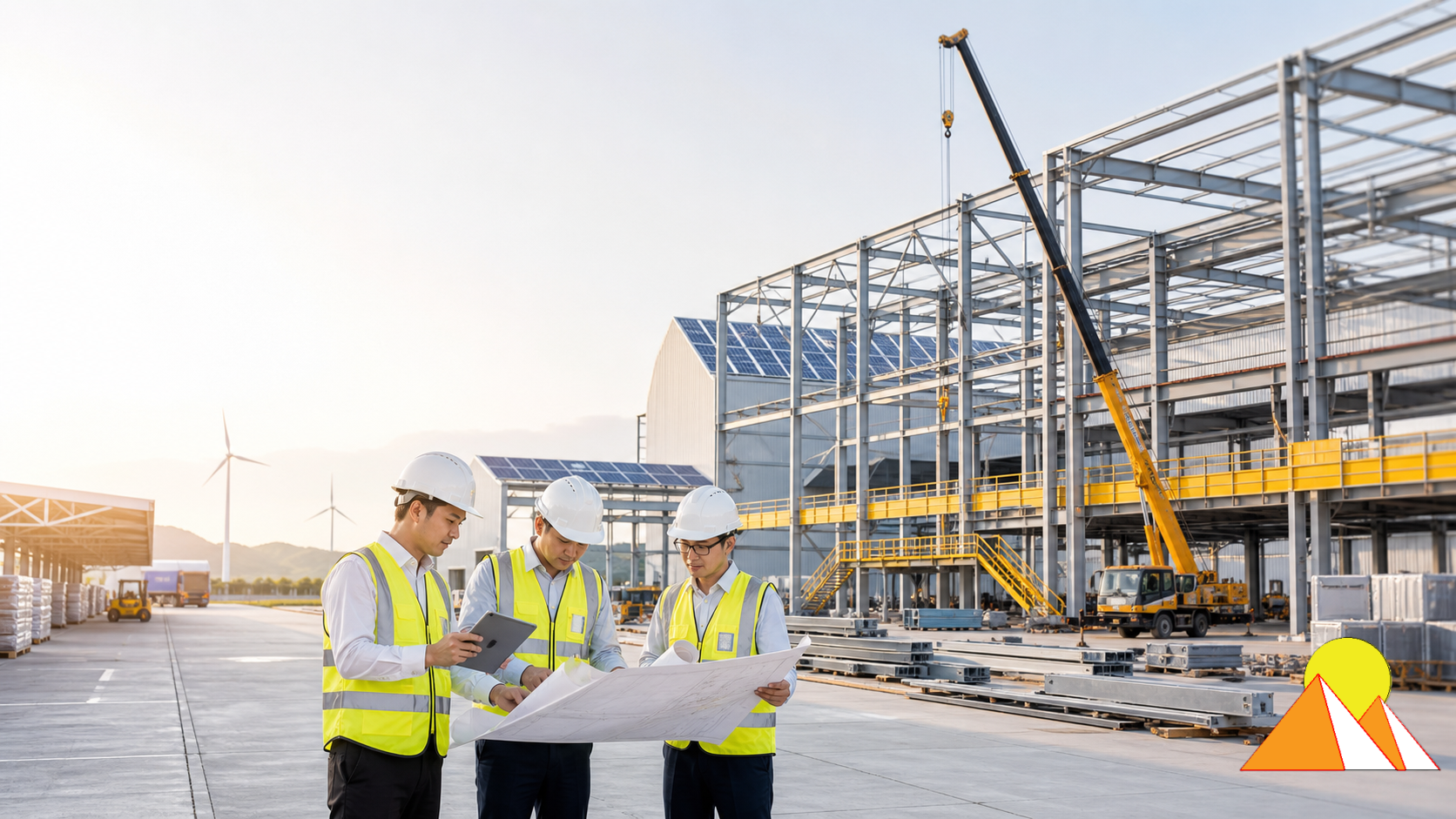
Investing in factory construction is more than just erecting a steel frame and a metal roof. In 2026, with increasingly stringent environmental and operational performance standards, budget management has become more complex than ever. How can businesses ensure quality without letting unexpected costs "devour" their initial financial plans? This is a question every investor needs a satisfactory answer to.
Overview of the 2026 Factory Construction Market
The year 2026 marks a strong shift towards Smart Factories and Green Buildings. As ESG (Environmental, Social, and Governance) standards become mandatory requirements in global supply chains, material costs are no longer static. The use of high-quality steel, standard-compliant insulation materials, or modern waste treatment systems has become a mandatory investment rather than an optional add-on.
Based on data regarding construction material price fluctuations, it's important to note that while the steel and ready-mix concrete markets show stability, prices for highly skilled labor are gradually increasing. The scarcity of green materials may also impact the projected budget margins.
Core Cost Categories in Factory Construction Projects
Design and Legal Procedure Costs
Many businesses often underestimate this stage, but it is the "foundation" of a safe project. Costs for design consultants, fire protection approval (PCCC), and environmental impact assessment (EIA) reports are non-negotiable expenses. Thorough legal preparation helps avoid unexpected fines or construction suspension due to design non-compliance later on.
Raw Construction and Structural Costs
This category accounts for 60-70% of the overall budget. It includes costs for piling, foundation pouring, and prefabricated steel frame fabrication. Real-world experience shows that selecting steel grades or foundation structures unsuitable for the local geology is a primary cause of cost overruns later on.
Finishing and M&E Systems Costs
Electricity, water, ventilation, and wastewater treatment systems adhering to 2026 standards require high technical expertise. Investing in integrated M&E systems not only ensures smooth operation but is also key to achieving green certifications, enhancing brand value for businesses.
Contingency and Incidental Costs
Project management realities indicate that allocating 10-15% of the budget for market fluctuations is a wise decision. Minor design changes during construction or material price volatility over time can be absorbed by this contingency fund.
Optimal Factory Budget Calculation Formulas
There are two common approaches: calculating per square meter or detailed quantity take-offs. Calculating per square meter provides a quick overview, but detailed quantity take-offs are the best 'shield' for budget protection.
Consider a real 2,000m² project that was implemented: by applying the detailed itemized take-off method (from steel quantity, roofing area, LED light wattage, etc.), the investor saved nearly 15% of the total cost compared to the initial lump-sum quotation. The reason was the discovery of redundant design details in the roofing system, which were replaced with thermally optimized materials, thereby reducing the load on the cooling system and future operational energy costs.
Smart Budget Allocation Strategies
Instead of trying to cut costs everywhere, focus on 'long-term' items. Substantial investment in a durable steel frame system, good insulation solutions, and rooftop solar power installation will yield a very clear return on investment (ROI) by reducing monthly electricity bills.
Conversely, optimize the production layout to eliminate superfluous space and reduce unnecessary material quantities. Note that all adjustments must be cross-referenced with national technical regulations (QCVN) to ensure the project remains legally compliant and avoids future legal complications.
Factors Influencing Project Quality
Choosing a competent EPC (Engineering, Procurement, and Construction) contractor instead of hiring numerous individual teams can save up to 20% in hidden costs. A reputable contractor will help investors effectively manage project items, ensuring transparency in material unit prices, steel grades, and electrostatic paint layer thickness. This transparency is not just a figure on paper but a commitment to the factory's durability against harsh weather conditions for many years.
Conclusion and Expert Advice
In 2026, the mindset of 'cheaper is better' has faded. Instead, the top priority should be optimizing space and production functionality. A smart design from the outset will help businesses save operating costs for decades to come. It's advisable to consult experts or reputable construction associations for the most up-to-date market insights.
The information in this article is compiled from many years of experience in industrial project consulting and supervision. For a more specific estimate for your project, organizations can contact us to receive a detailed 2026 sample budget sheet.