
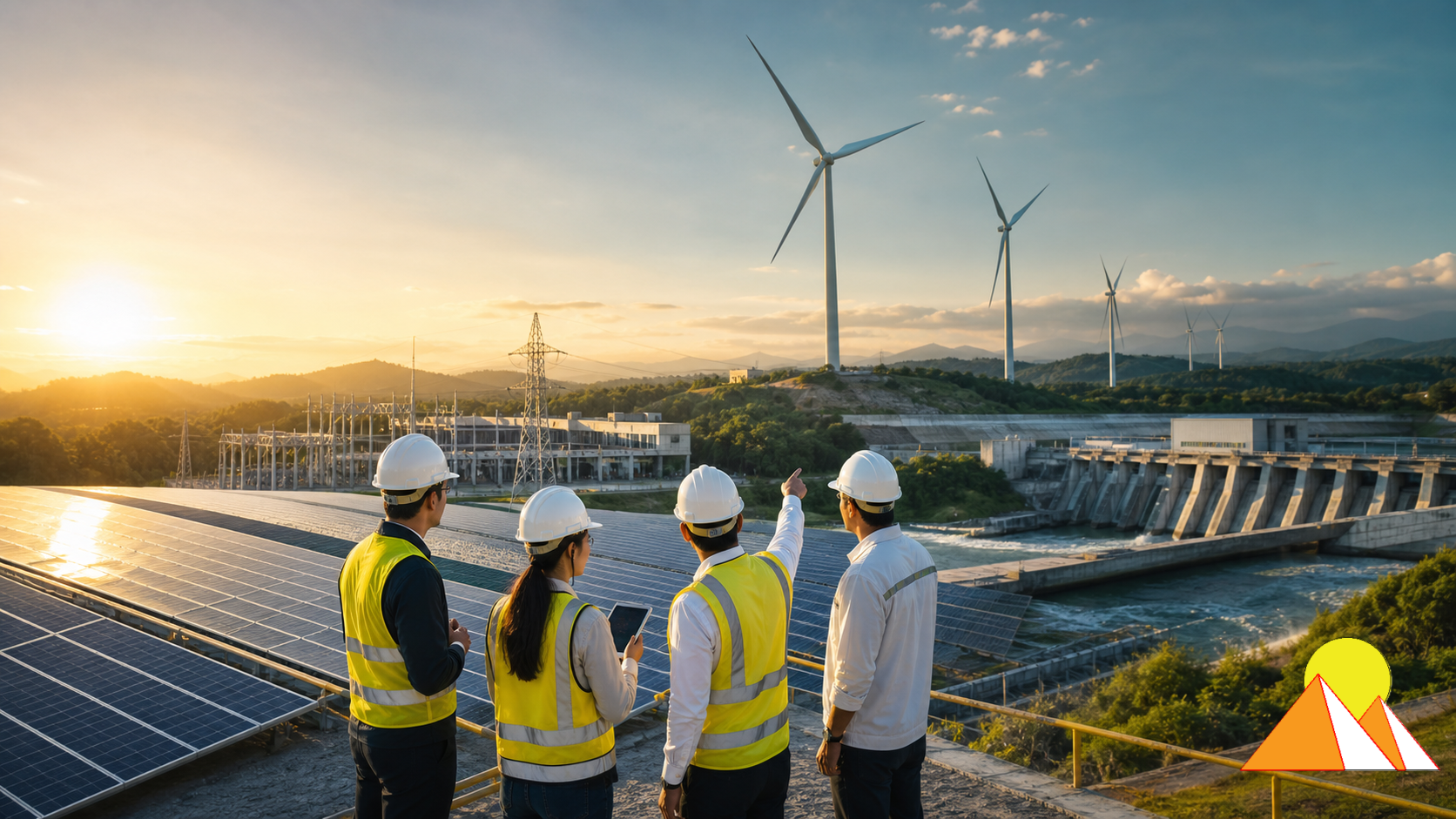
The world is facing momentous changes as the race towards Net Zero is no longer a mere slogan but has become the guiding principle for the development of every economy. By 2026, the global energy landscape has shifted significantly with the strong participation of groundbreaking technologies. Reports from the International Energy Agency (IEA) show that the share of renewable energy in the power mix is maintaining record growth, gradually replacing the dominant role of fossil fuels.
The Global Energy Transition Landscape in 2026
In 2026, reducing reliance on coal and oil has become a national energy security priority. This is not just an environmental issue but also an economic challenge and a matter of long-term stability. The governing policies of many nations have created a favorable environment for investment capital to flow into green projects, transforming renewable energy from an alternative option into a cornerstone of national power grids.
Key Pillars of Renewable Energy Technology
Next-Generation Solar Power with Perovskite and BIPV
While traditional silicon solar cells have reached their efficiency limits, the emergence of Perovskite materials represents a technological breakthrough. Real-world experiences in laboratories and pilot projects show that Perovskite solar cells not only offer superior photovoltaic conversion efficiency but are also much more flexible. Furthermore, BIPV (Building-Integrated Photovoltaics) technology is transforming urban design thinking; now, each building is not just a workplace but also a miniature power plant, perfectly harmonizing with modern architecture.
Offshore Wind Power and the Advancement of Floating Turbines
Wind energy harvesting is no longer limited to shallow coastal areas. With the successful development of floating wind turbine systems, the potential for exploitation in deep waters has opened up new horizons. These turbines can be installed where wind speeds are more stable and stronger, optimizing electricity output even when terrain conditions are unfavorable.
The Role of Green Hydrogen in Heavy Industry
For hard-to-decarbonize sectors like steel and cement production, Green Hydrogen is considered a "golden key." By using electricity from renewable sources to split hydrogen, we obtain a clean fuel with high energy density. The application of Green Hydrogen in long-haul transport and industrial manufacturing is helping to achieve seemingly impossible emission reduction targets.
Storage Technology and Grid Stability
Large-Scale Battery Energy Storage Systems
Grid stability is entirely dependent on storage capacity. Lithium Iron Phosphate (LFP) battery technology has demonstrated high durability and safety, making it a preferred choice for current BESS systems. Long-duration storage projects, such as thermal storage or redox flow batteries, are also beginning to be commercialized, addressing the challenge of supply "disruption" when the sun sets or the wind dies down.
Smart Grids and Artificial Intelligence
The complexity of modern power grids demands a sophisticated "brain." AI and Machine Learning (ML) now play a crucial role in forecasting loads, balancing the grid in real-time, and automating the distribution of energy from various intermittent sources, minimizing waste and the risk of overload.
Real-World Experiences from Featured Projects
In practical implementation, Microgrid models in green industrial zones are showing results beyond expectations. By harmoniously combining rooftop solar power, BESS storage systems, and smart management software, many entities have achieved 60-70% self-sufficiency in their electricity needs. However, the biggest challenges remain the initial infrastructure investment costs and the necessity of a highly specialized technical team to operate these complex systems.
Ensuring Transparency and Credibility in Green Development
To ensure substantive development, compliance with international standards such as ISO 50001 or the GHG Protocol is mandatory. These are not merely performance metrics but also commitments to Environmental, Social, and Governance (ESG) responsibility. Green-certified projects not only enhance asset value but also gain significant trust from the international investment community.
Vision 2030: Roadmap and Challenges
Looking towards 2030, we anticipate that the Levelized Cost of Energy (LCOE) for renewable sources will continue to fall significantly. However, obstacles such as slow-changing policy mechanisms and a shortage of high-quality human resources remain "bottlenecks" that need to be addressed promptly. The synchronization between technical infrastructure and policy will be the decisive leverage for the pace of the green transition roadmap.
Conclusion
By 2026, renewable energy has moved beyond the concept of an "alternative option" to officially become a "mandatory requirement." This transition is not only for the environment but also a way to ensure national energy sovereignty and security. With the current pace of technological development, a green future is no longer a distant vision, but the result of sound investment decisions made today.
Author: Energy analyst with over 10 years of experience in energy transition and sustainable infrastructure (Data updated May 2026).