
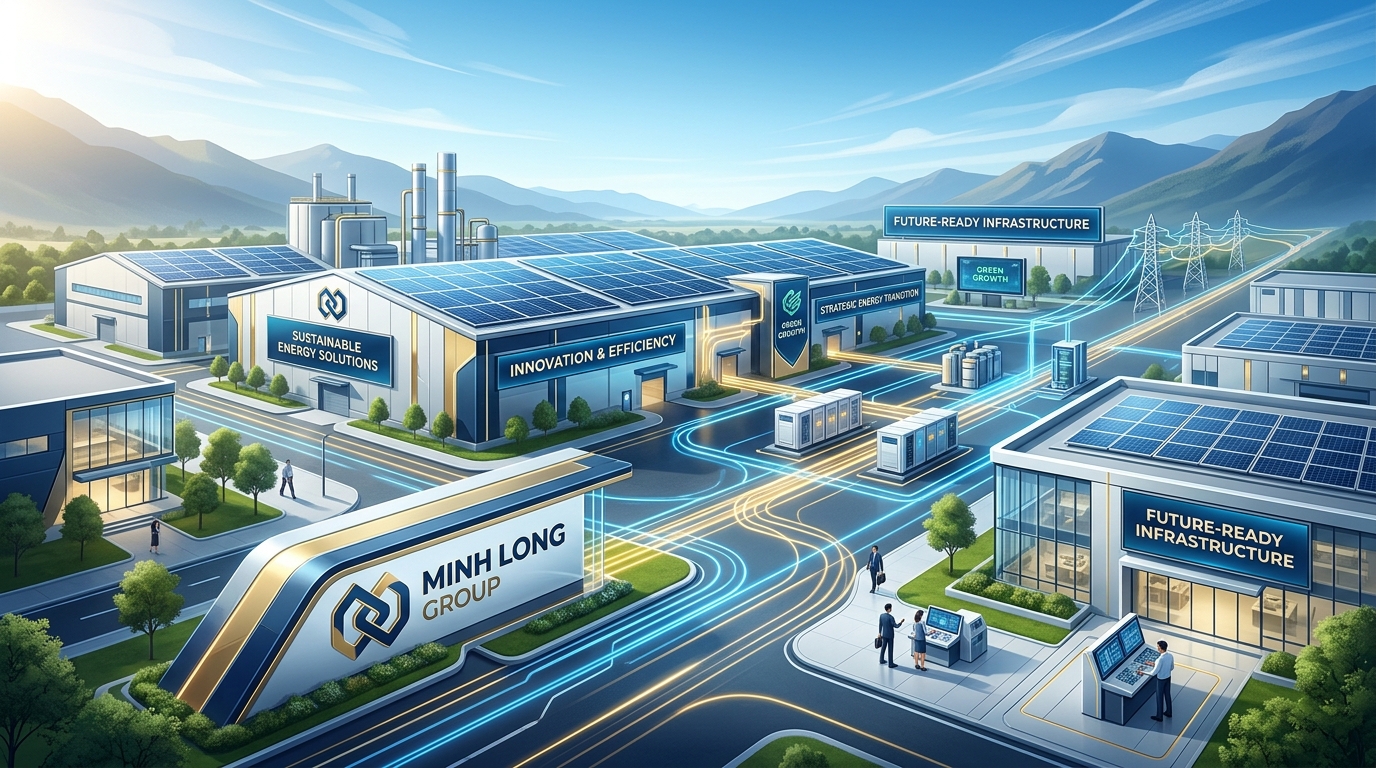

Amidst the unpredictable shifts in the global economy, the term "energy transition" is no longer confined to environmental policy forums. For businesses, it has become a calculated management challenge, directly impacting their long-term survival and growth.
The Reality of the Energy Crisis and Pressure on Modern Businesses
In recent years, fossil fuel prices have fluctuated sinusoidally, creating significant challenges for businesses' financial planning. According to reports from the International Energy Agency (IEA), the world is facing serious instability in electricity supply, forcing manufacturing units to contend with escalating electricity prices.
Beyond financial pressure, an over-reliance on traditional power grids also poses risks of supply chain disruptions. When system failures occur, businesses without backup power sources can easily face production halts, leading to significant economic losses.
Direct Economic Benefits of Energy Transition
Optimizing Long-Term Operating Costs
While the initial investment for systems like rooftop solar may give many managers pause, considering a 15-20 year lifespan, this is an extremely effective financial optimization strategy. By using self-generated energy, businesses reduce their dependence on gradually increasing annual electricity tariffs, thereby stabilizing the cost of their output products.
Enhancing Self-Sufficiency and Energy Security
In practice, businesses that proactively install clean energy systems have partially avoided rotational power cuts during peak seasons. Taking control of energy sources not only protects operational lines but also provides absolute peace of mind for customers and partners in the supply chain.
Real-world experience from several manufacturing facilities in Southern industrial zones indicates that after investing in solar power systems, their monthly electricity costs decreased by 20-30%, leading to a return on investment in just about 5-6 years of operation.
Energy Transition – A "Passport" in the Global Supply Chain
Meeting ESG Standards and Requirements from Major Partners
Today, industry giants like Apple, Nike, and Samsung don't just focus on product quality; they also rigorously evaluate their suppliers' Net Zero roadmaps. Demonstrating the use of green energy is the "golden key" to maintaining a strong position in the global supply chain.
Overcoming Green Tariff Barriers
With the EU's Carbon Border Adjustment Mechanism (CBAM), exported goods that fail to meet carbon footprint standards will face very high tariffs. Transitioning to renewable energy now becomes a smart defensive strategy to prevent Vietnamese goods from being excluded from demanding markets.
Enhancing Competitiveness and Brand Reputation
Accessing Green Capital
Banks are prioritizing low-interest green credit lines for sustainable projects. When businesses demonstrate their commitment to sustainability through energy transition, accessing preferential capital becomes easier than ever, paving the way for business expansion plans.
Building a Sustainable Business Image
Gen Z and Millennial consumers prioritize brands with environmental responsibility. A business that publicly demonstrates low emission rates not only attracts customers but also acts as a "magnet" for retaining talent – individuals who seek to contribute to a visionary organization.
Implementation Roadmap: From Strategy to Action
To embark on this journey, the first step for businesses is to conduct a comprehensive Carbon Footprint Audit to identify energy consumption "hotspots." Before installing any systems, consider implementing on-site energy-saving measures, such as replacing high-efficiency equipment or optimizing production processes.
Subsequently, businesses can choose suitable options such as:
- Rooftop Solar: Suitable for factories with large roof areas.
- Renewable Energy Certificates (RECs): A flexible solution for office-based businesses.
- Direct Power Purchase Agreements (DPPAs): An optimal choice for large-scale energy consumers.
Conclusion
Transitioning to renewable energy is no longer a "nice-to-have" option for brand promotion; it is a critical imperative for survival. Delaying action now means accepting the risk of falling behind in a fiercely competitive race. In the next 5-10 years, businesses that start "greening" today will undoubtedly be the leaders in the game.
Author: A sustainable energy analysis expert with over 10 years of experience consulting on operational model transformation for businesses in Vietnam.